Sámi Museum Siida publishes a trilingual research publication on Pielpajärvi Church
- 27.11.2025
- Release

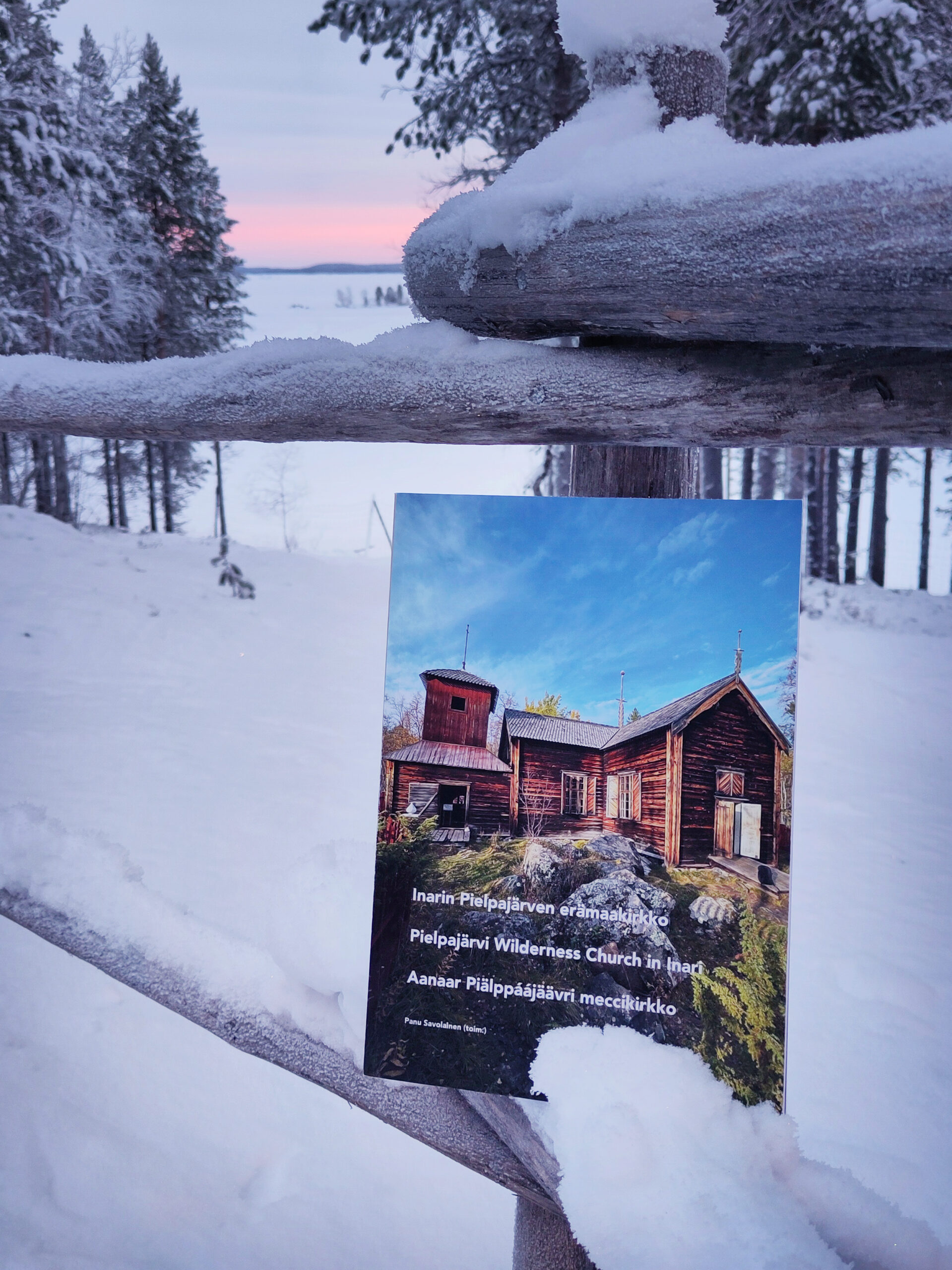
Pielpajärvi Church is one of the oldest built heritage sites in northern Finland and an internationally significant monument of wooden architecture. On Tuesday, 2 December 2025, the Sámi Museum Siida will publish the first extensive, trilingual research publication dedicated to Pielpajärvi Church. The book is edited by Professor Panu Savolainen, Chair of Architectural History at Aalto University, and authored by several experts in architectural history, cultural heritage studies and art history. The publication brings together the latest research findings and previously unpublished visual material.
Pielpajärvi Church was built in the late 1750s in a Sámi winter village as the parish church of Inari. It was abandoned in the 1890s when the parish centre was relocated to the mouth of Juutua River. Today, it is a popular site for weddings and a well-known historical attraction, reflecting both Sámi and Christian traditions.
The new publication released by the Sámi Museum Siida presents the history, architecture and cultural significance of the church in a scope and depth not previously compiled in a single volume. The trilingual work (Finnish–English–Inari Sámi) serves both as an accessible guide for general readers and as a scholarly resource for professionals in the field of built heritage. The book is based on a research project funded by the Lapland Fund of the Finnish Cultural Foundation and Kone Foundation (2021–2022), which examined archival sources on the church’s construction history and carried out extensive building-archaeological documentation. Since 2023, the architectural firm Livady has carried out additional research commissioned by the Parish of Inari.
The book’s extensive illustrations consist largely of previously unpublished material. Among them is a recently discovered 1885 photograph from the collections of the University of Florence – the oldest known image of Pielpajärvi Church – as well as new photogrammetric measurements.
The book opens with a chapter by Panu Savolainen, who contextualises the architectural history of the church and examines archival sources related to its construction. Articles by Marko Huttunen and Pauliina Saarinen discuss the church’s restoration history from the 20th century onwards, documentation, structures and the building process. Suvi Toivanen’s chapter explores the carvings on the interior walls and visitor inscriptions from the perspective of cultural heritage studies. Tuomas Ranta-aho provides an overview of the photogrammetric documentation carried out in 2021. Päivi Magga and Miina Tolonen examine the architectural and cultural heritage values of the church. The book concludes with a personal reflection on Pielpajärvi Church by Tuomo Huusko, vicar of Inari.
Inarin Pielpajärven erämaakirkko – Pielpajärvi Wilderness Church in Inari – Aanaar Piälppáájäävri meccikirkko. Ed. Panu Savolainen. Authors: Marko Huttunen, Tuomo Huusko, Päivi Magga, Tuomas Ranta-aho, Pauliina Saarinen, Panu Savolainen, Suvi Toivanen and Miina Tolonen. Inari Saami translation by Saammâl Morottaja.
Further information: Prof. Panu Savolainen, Aalto University, panu.savolainen@aalto.fi, +358 50 475 6727.